
Mobile WMS on the Warehouse Floor: How Handheld Devices Are Replacing Paper Entirely
Warehouse teams that have moved from printed pick lists to mobile WMS apps report accuracy improvements of over 85%. Here's what the transition looks like and what to expect.
The printed pick list has been the primary tool of the warehouse picker for decades. Generated from the WMS, handed to a picker at the start of a shift or a batch, it describes what needs to be picked, from where, in what quantity, for which order. The picker completes the list — crossing off or initialling each line — and returns the completed sheet to a supervisor or scanner station for confirmation.
The system works. But it carries operational costs that have become increasingly difficult to justify when the alternative — mobile WMS on a handheld device — is now both affordable and proven.
Why Printed Pick Lists Fail at Scale
At low order volumes and with a small, experienced team, the printed pick list is a reasonable approach. The problems scale with the operation:
Real-time stock discrepancy. A pick list is a snapshot generated at a point in time. By the time the picker reaches the bin location, stock may have been consumed by another picker on a different order. The paper list has no way to reflect this — the picker either proceeds on incorrect information or makes a trip back to the office to resolve the discrepancy.
No pick confirmation. A completed paper pick list confirms that the picker completed the list — not that the correct items were actually picked. Without scan confirmation, pick errors that occur at the bin location (wrong variant, wrong quantity) are not caught until packing or, worse, after dispatch.
No real-time productivity data. Paper pick lists provide no mechanism for tracking pick rate, identifying bottlenecks, or monitoring individual picker performance in real time.
Returns and rework. The combination of the above factors produces error rates that generate significant returns and rework. Operations we have reviewed that moved from paper to mobile WMS reported immediate reductions in pick errors of 80–90%.
What Mobile WMS Changes
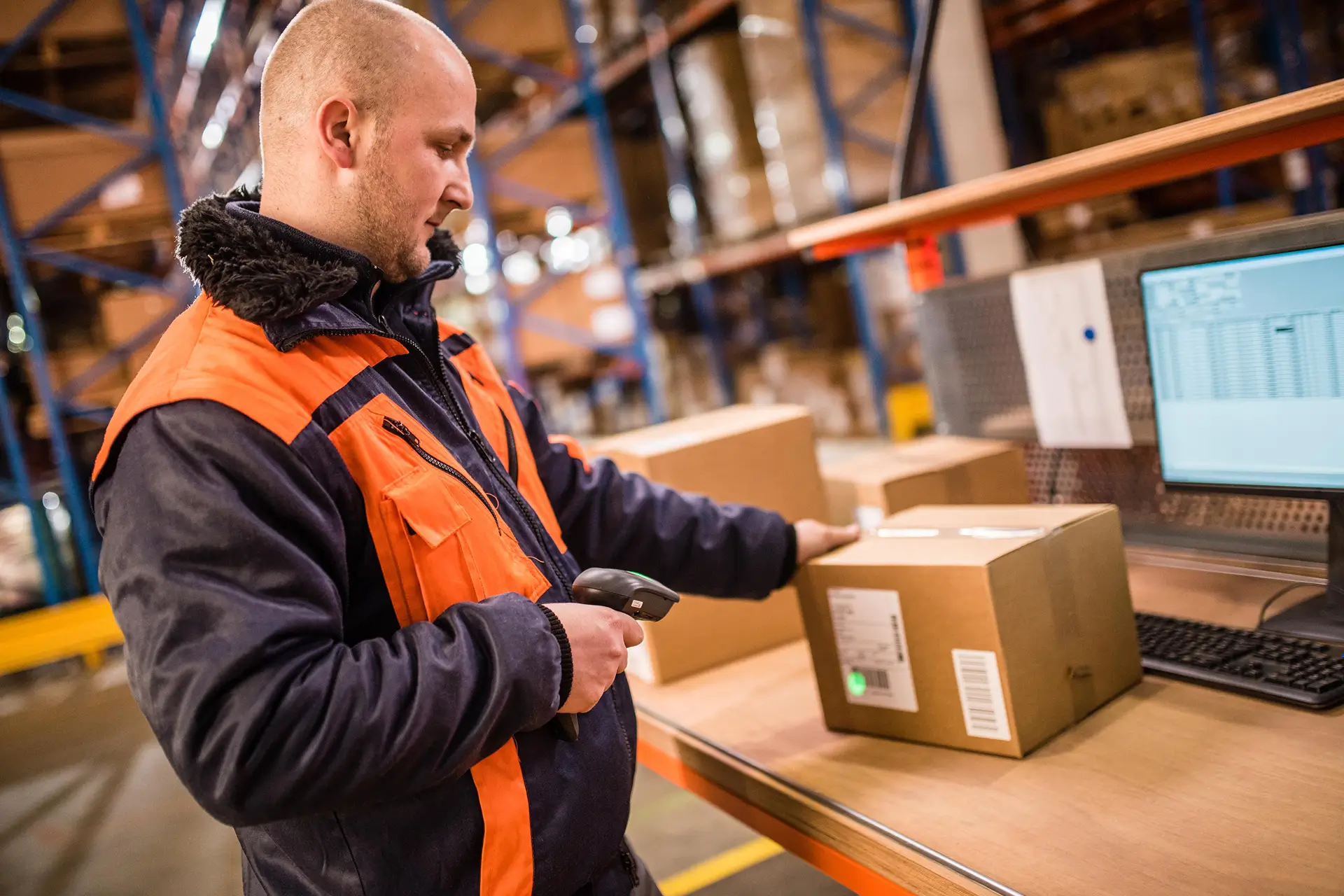
Mobile WMS replaces the printed pick list with a dynamic, scan-confirmed picking interface on a handheld device. The picker receives their task list digitally. At each bin location, they scan the product barcode to confirm the correct item, enter or confirm the quantity, and advance to the next task. The WMS updates inventory in real time with each confirmed pick.
The operational impact is consistent across deployments:
- Pick error rates fall to below 1% within 60 days
- Real-time supervisor visibility of pick progress across the entire team
- Immediate notification of stock discrepancies, enabling same-day investigation
- Automatic FEFO enforcement in pharmaceutical environments
- Pick rate data available for each picker, each shift, enabling data-driven coaching and scheduling
Hardware Options for 2026
The hardware landscape for mobile WMS in 2026 offers genuine choice across price points. At the premium end, enterprise-grade devices from Zebra and Honeywell offer rugged construction, long battery life, and integrated barcode scanners purpose-built for warehouse use. For operations where cost is a constraint or where devices are also used for other purposes, modern smartphones — particularly those with dedicated barcode scanning modes — deliver comparable pick accuracy at a fraction of the hardware cost.
ZifyWMS's mobile app is designed to work effectively on both enterprise scanners and standard iOS/Android devices, allowing operations to choose the hardware profile that fits their environment and budget.