
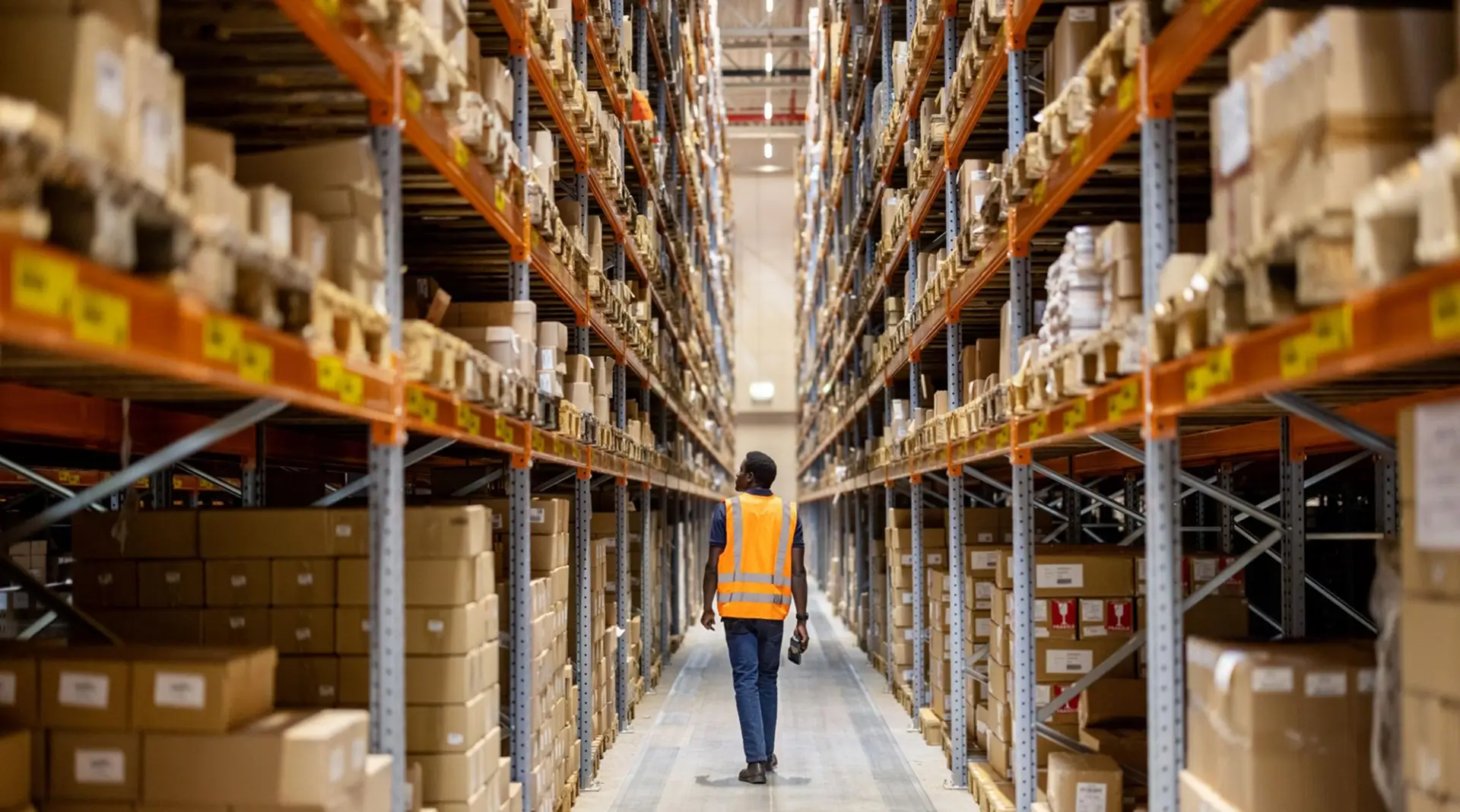
Warehouse Layout and Its Hidden Impact on Picking Productivity
The physical organisation of your warehouse has a direct, calculable impact on labour cost. Here's how smart slotting and zone design can reduce pick travel time by up to 35%.
The physical design of a warehouse is a fixed cost with a variable impact on operational efficiency. Once racking is installed and zones are established, the layout tends to remain unchanged for years — even as the product range, order volumes, and customer mix evolve significantly. This inertia is expensive.
The Measurable Impact of Layout on Labour Cost
Labour is typically the largest controllable cost in a distribution warehouse, accounting for 50–65% of total operating costs. Within labour cost, order picking accounts for the largest share — often 60–70% of warehouse labour time. The distance a picker travels to fulfil an order is therefore a direct determinant of your labour cost per order.
Research consistently shows that in poorly optimised warehouses, pickers travel 2–3 times the distance that efficient slotting and routing would require. A picker covering 8 km per shift in an unoptimised layout might cover 5 km in an optimised one — without any reduction in throughput. At scale, across a team of 10 pickers over 250 working days, that difference compounds to over 7,500 km of unnecessary travel per year.
ABC Slotting: The Foundation of Layout Optimisation
The most impactful single intervention in warehouse layout optimisation is ABC slotting: positioning the highest-velocity SKUs (A items) closest to the dispatch area, mid-velocity SKUs (B items) in the next zone, and slow-moving or bulky items (C items) in the most remote locations.
In a typical distribution operation, 20% of SKUs account for 80% of order lines. Ensuring those SKUs are in the most accessible positions — at pick height, near the despatch dock, in the central aisle — is the highest-return layout intervention available.
Zone Design and Batch Picking
Beyond slotting, zone design determines how efficiently multiple orders can be picked simultaneously. A well-designed zone structure allows a single picker to service multiple orders in a single traversal of their zone, with order consolidation happening at the packing bench rather than on the warehouse floor.
Batch picking — where a picker collects items for multiple orders simultaneously — can increase pick rate by 30–50% in operations with short order lines and high order volumes. The prerequisite is a WMS that can intelligently group orders by zone and generate optimised batch pick lists, which ZifyWMS does automatically.
Dynamic Slotting
In operations where demand patterns shift significantly — seasonal businesses, promotional retailers, pharmaceutical distributors responding to therapy trend changes — static slotting quickly becomes sub-optimal. Dynamic slotting uses ongoing demand data to periodically reposition SKUs as their velocity changes. ZifyWMS's analytics engine flags SKUs that have migrated significantly in their velocity ranking, prompting the warehouse manager to review and update their location assignments.